Challenges of Hospital Navigation
Patients and visitors often face significant challenges when navigating hospitals due to the complex layouts, large facilities, and unfamiliar environments. Hospitals typically have intricate floor plans with multiple wings, floors, and departments, making it easy for individuals to become disoriented, especially when clear and concise signage is lacking. Additionally, the stress of medical appointments or emergencies can heighten the difficulty of navigating an unfamiliar setting.
Role of Wayfinding Technology
Wayfinding plays a crucial role in enhancing the patient and visitor experience in hospitals. Hospital signage provides clear information at key locations, offering directions, department names, and real-time updates that help reduce confusion. Interactive kiosks allow users to access maps, search for specific departments or services, and receive step-by-step directions, ensuring that users can effortlessly find their way to specific rooms or departments.
Hospital Digital Signage and its Benefits
Patient-centered wayfinding solution
Digital signage for hospitals can significantly enhance navigation within facilities by providing clear, concise, and easily accessible wayfinding information. Strategically placed digital displays offer step-by-step directions, interactive maps, and real-time updates, helping patients and visitors quickly locate departments, rooms, and services. These signs can be customized to display multilingual information, reducing the complexity of navigating large and intricate hospital layouts, streamlining the flow of foot traffic, and minimizing the need for repeated directional assistance, helping to reduce the workload on staff and aiding in improving the patient experience.
A valuable tool for patients
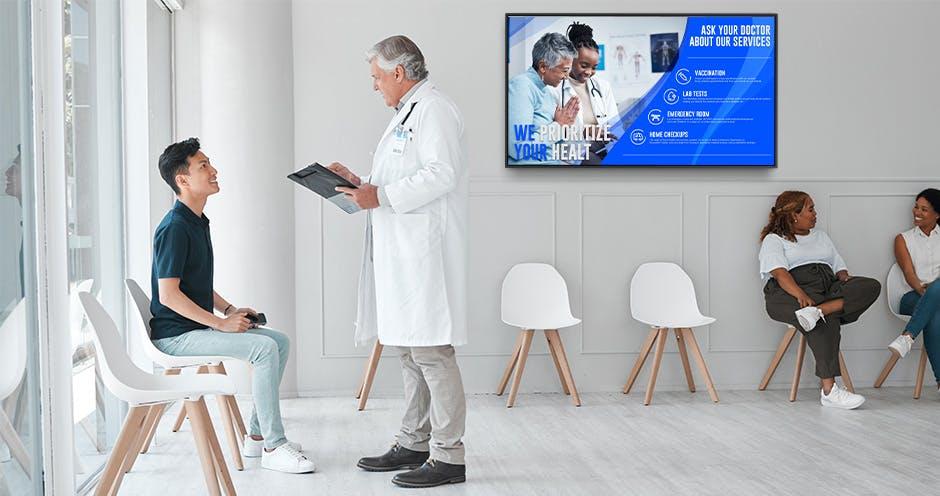
Medical facilities can strategically use signage in waiting areas to distribute essential information about hospital cleanliness, health education, and specialized content tailored to the facility's needs. Digital signage for healthcare can display guidelines on proper hygiene practices, such as handwashing and mask-wearing, and can share health information, such as tips for managing chronic conditions, upcoming vaccination clinics, and wellness programs. By providing relevant educational content, digital signage can engage and inform patients, helping to reduce perceived wait times and enhance their overall experience.
Integration with hospital systems for real-time updates and alerts
Digital signage in hospitals can integrate with existing hospital systems to provide real-time updates and alerts, significantly enhancing communication and operational efficiency. By connecting to hospital databases and information systems, digital signs can automatically display current data such as appointment schedules, waiting times, and patient queue status, as well as any changes to hours of operation, new services available, or other important information. In emergency situations, these signs can quickly broadcast critical alerts, evacuation instructions, or changes in hospital protocols, ensuring that everyone in the facility is promptly informed.
Hospital signage and wayfinding technology are indispensable tools in enhancing the patient and visitor experience within medical facilities. By providing clear, real-time navigation assistance through digital signage, interactive kiosks, mobile apps, and integrated GPS systems, hospitals can significantly reduce the stress and confusion often associated with navigating complex environments, ensuring that patients and visitors can easily find their destinations, receive important health information, and stay informed during their visits. Effective wayfinding solutions contribute to a more efficient, safe, and welcoming healthcare environment, fostering greater patient satisfaction and improving overall operational efficiency.
To learn more about how VXT can help you manage your digital displays, see our Features page, or visit our Pricing page for information on digital signage pricing.