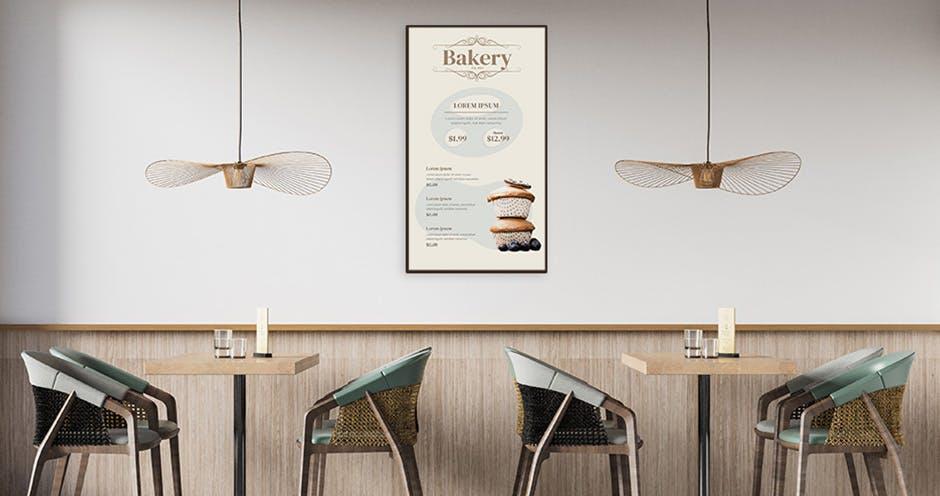
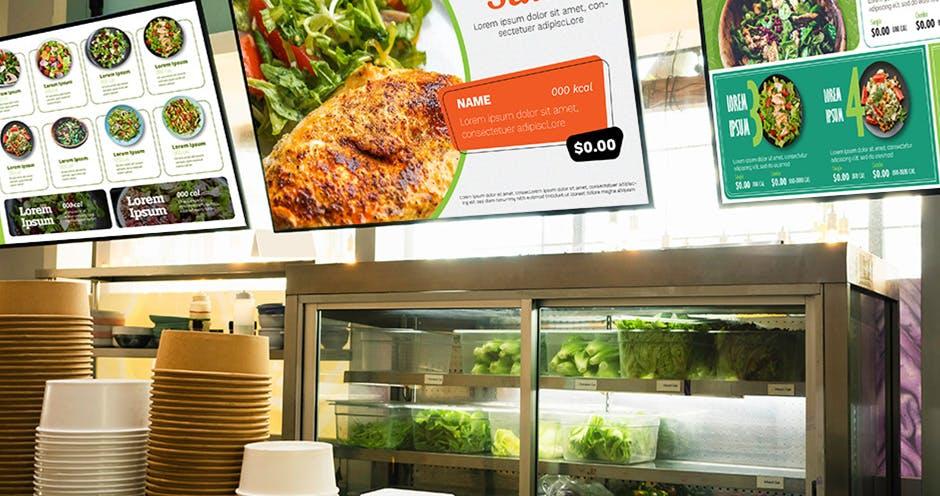
Deploying digital displays in a dining establishment doesn’t require a massive capital outlay for commercial-grade screens. If a restaurant owner is seeking a budget-friendly TV specifically designed for business use, Samsung’s line of Pro TV displays is a good option for TV menu boards. Since many establishments may already have TVs, they can repurpose them as menu boards with minimal additional investment.
How to Create a TV Menu Board for Your Restaurant or Café
Of course, the first hurdle a restaurant operator will likely face is how to put a menu on a TV screen. Let’s start at the beginning:
Selecting the Correct Hardware
Selecting the right TVs as menu boards is the first step in the process. You’ll want an affordable TV that is large enough to be seen clearly from a distance and can withstand the rigors of round-the-clock operation such as Samsung’s Pro TV displays. They are offered with screen sizes ranging from 43” to 85”.
Creating Your Own Menu
The Samsung VXT digital signage solution is one of the leading digital menu board software packages on the market. VXT simplifies the process of placing a restaurant menu on a TV screen, allowing for quick and intuitive content creation that can be easily managed from a central dashboard.
The VXT Canvas content creation tool allows operators to design menus via a WYSIWYG (What You See Is What You Get) authoring tool, with drag-and-drop capabilities for users to select and edit assets easily. Canvas also includes a library of templates and the ability to upload your own custom assets. Operators simply add stock images and the restaurant’s own pictures, videos, and pricing information.
Publishing Your Menu and Managing Changes
Setting up the menu boards is easy. Simply connect your Samsung Pro TV to the Samsung VXT software to display your menu on the TV screen. VXT is also compatible with all devices based on the Android OS. Upload and publish your content, and you’re ready to go.
With VXT’s remote management tools, content can be managed from anywhere. Keeping branding and pricing consistent across multiple changes is a breeze. Content can be updated in real-time from a single dashboard.
As you’re creating your menu, keep in mind a few design tips. Include high-quality, appetizing images of your food, but don’t overcrowd the space. Avoid clutter. Too much information or too many design elements can be distracting and hard to read from a distance. Clearly list prices and item descriptions.
Use subtle animations to draw attention to specials or promotions without being too distracting. Screens should be easily visible to all customers, including those in wheelchairs. Use color schemes that are accessible to individuals with color vision deficiencies.
And don’t forget VXT’s built-in scheduling tools. Restaurants can incorporate dayparting to schedule different content for different times of the day. Along with changing menus by breakfast, lunch, and dinner menus, position appetizers and desserts more prominently during afternoons and late nights, and special promotions for busy periods.
Operators can also find tips on video content for ProTV models here and here.
The Benefits of Digital Menu Boards
Incorporating digital menu boards into a restaurant's operations can lead to a variety of benefits, including improved customer satisfaction and an enhanced dining experience. Other benefits include:
Benefit #1: Enhanced visual appeal
High-resolution digital displays provide vibrant and eye-catching visuals that can showcase menu items in a more appetizing way.
Benefit #2: Time and cost savings
Digital menu boards reduce the time and effort required to print and distribute paper menus, saving on printing costs and minimizing waste.
Benefit #3: Analytics and data collection
Digital menu boards can aid in collecting data on customer interactions, including which menu items are getting the most attention, what's being ordered, and when.
Benefit #4: Cross-promotion and upselling
Digital menu boards can strategically promote high-margin items, combos, or add-ons by featuring them prominently or using suggestive selling techniques. Dynamic content can also respond to customer choices, suggesting complementary items based on what they've already ordered.
Benefit #5: Real-time content management
Digital menu boards allow restaurants to easily update and customize their menus in real time. Operators can swap out menus by day part, promote daily specials, adjust prices, or make changes due to out-of-stock items.
Benefit #6: Environmental enhancements
Using a digital menu boards can prevent unnecessary waste of paper.
Benefit #7: Increased sales
Digital menu boards can be programmed to suggest complementary items, such as a drink or side item, which can increase the average order value. They can also highlight more profitable items or bundles. Additionally, digital signage allows operators to easily test different menu designs for effectiveness without the need for reprinting.
The variety of features in Samsung VXT CMS ensures that menu boards are consistent throughout the system, no matter how many restaurants it includes. Content and pricing are always up-to-date, even in situations where pricing or menu items are different across regions.
Read more about the benefits of incorporating Samsung VXT into a restaurant’s operation here.
Thousands of restaurant operators already using digital menu board systems are reaping these benefits. To see how the Samsung VXT CMS can benefit your operation, sign up for a free trial.